It looks like just another ad tag, with a basic banner image and minimal HTML. The creative seems innocuous enough — a no-name fashion brand broadcasting new arrivals or a clearance sale.
But that’s how PopCrawler infests the digital media ecosystem — appearing so boring and plain as not to set off any alarms. A virtual wallflower on the media landscape — only one with malevolent intentions. Once this prolific new phishing attack starts redirecting consumers to bogus reward sites and even tech support scams that can liquidate bank accounts, the sirens begin to blare.
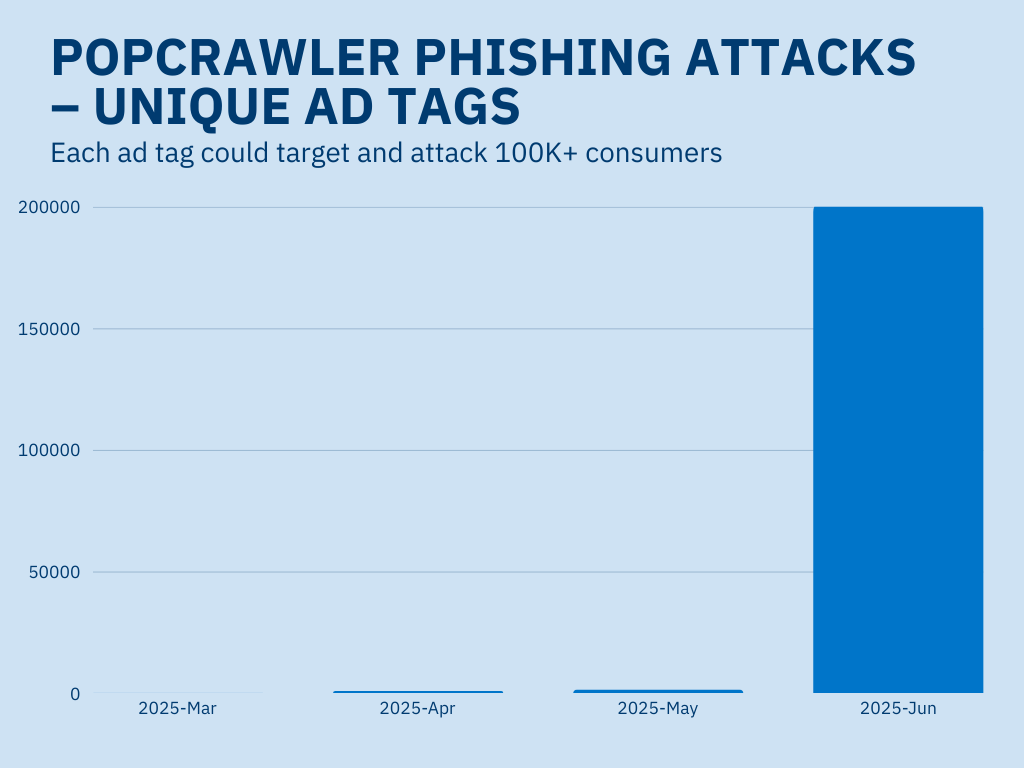
After months of growing unique outbreaks, ad tags with PopCrawler phishing attacks grew 12X in June 2025.
While The Media Trust’s Digital Security and Operations team found a growing number of unique outbreaks across a small amount of ad tags throughout this year, this changed dramatically in June 2025. The amount of ad tags wielding PopCrawler phishing attacks exploded, growing 12.5X month over month — 200,000 malicious ad tags affecting thousands of premium publishers and adtech platforms.
A sampling of innocuous creatives that hide PopCrawler phishing attacks.
Resilience Through Fingerprinting and Adaptive Behavior
Unlike the pervasive StringRipper phishing attack that has grown dramatically in 2025, PopCrawler’s evasion techniques are surprisingly unsophisticated. Its alarming spread can be attributed to strategic use of fingerprinting, redundancy, and adaptive behavior to bypass common security mechanisms.
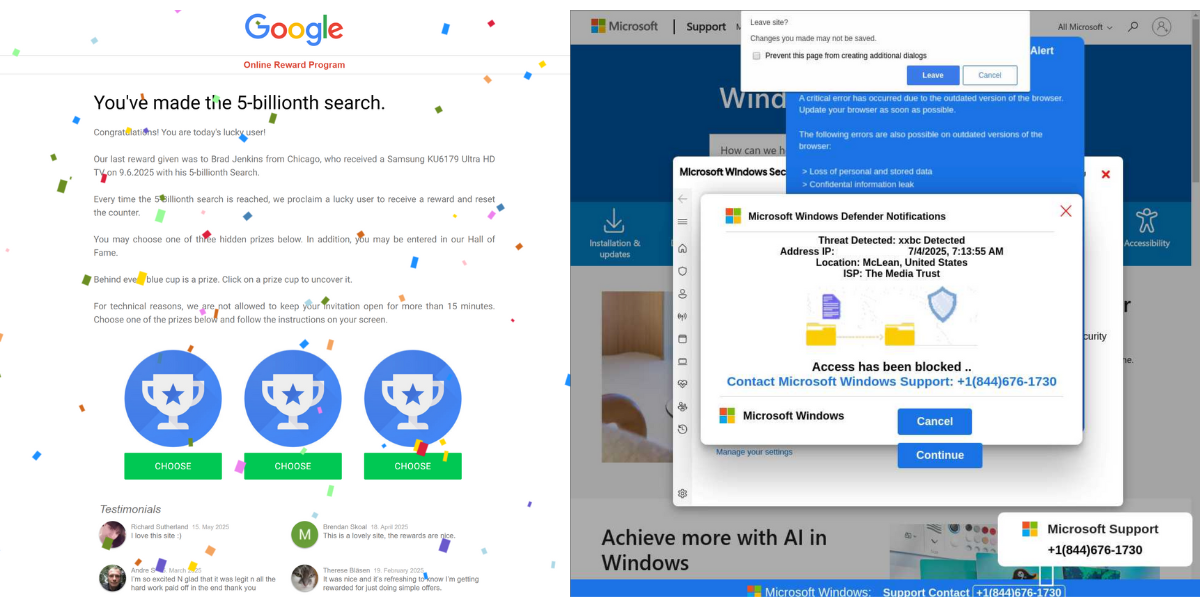
Malicious payloads deployed by PopCrawler include bogus Google rewards and tech support scams.
The attacker’s use of multiple redirect techniques, combined with optional Base64 encoding and layered delivery methods, makes the threat particularly resilient and difficult to detect. The inclusion of fingerprinting data in the redirect URL also enables server-side filtering and targeting by the attackers.
The Media Trust’s Digital Security and Operations team has assembled an in-depth report on PopCrawler’s deviously clever execution. To avoid spreading valuable information to malicious parties, it is only available by request and with a verified email. (You must submit a company email to receive the report.)
What is PopCrawler?
PopCrawler is a named phishing threat identified by The Media Trust that uses malicious advertising and sophisticated redirect chains to lead users to fraudulent phishing pages. The campaign is designed to evade traditional detection while maximizing the likelihood that users will interact with malicious content.
How does the PopCrawler phishing attack work?
PopCrawler begins with a malicious advertisement that redirects users through multiple intermediary pages and deceptive pop-ups before landing on a phishing website. The campaign frequently changes its infrastructure and behavior to avoid detection by automated security systems.
Why is PopCrawler difficult to detect?
PopCrawler uses techniques such as dynamic redirects, cloaking, browser fingerprinting, and conditional content delivery to hide malicious behavior from scanners while serving phishing pages only to targeted users. These tactics make the campaign significantly more difficult to identify than traditional phishing attacks.
What is cloaking in phishing campaigns?
Cloaking is a technique that presents different content depending on who is viewing a webpage. Security scanners may see harmless content, while real users are redirected to phishing sites or other malicious destinations, making detection much more challenging.
Who is affected by PopCrawler?
PopCrawler affects publishers, advertisers, ad tech platforms, mobile app developers, and consumers. Publishers and advertisers risk brand damage and compromised user experiences, while consumers may be exposed to credential theft, financial fraud, or malware through phishing pages.
How does PopCrawler spread through digital advertising?
The campaign abuses legitimate advertising infrastructure by embedding malicious code or redirect logic within digital ads. Because the ads can appear on trusted websites and apps, users often have no indication they are being redirected to a phishing campaign.
How can organizations protect against PopCrawler?
Organizations should continuously monitor ad creatives and landing pages, analyze redirect behavior in real time, inspect third-party code, and deploy advanced threat detection capable of identifying malicious activity as it executes. Proactive monitoring helps stop phishing campaigns before they impact users.
Why is real-time threat detection important?
PopCrawler rapidly changes domains, redirects, and attack techniques to evade static security tools. Real-time monitoring enables organizations to detect these changes quickly and block malicious campaigns before they can spread.
What are the warning signs of a phishing redirect?
Users should be cautious if they experience unexpected pop-ups, multiple redirects, requests for login credentials or payment information, unfamiliar URLs, or websites that closely imitate trusted brands while asking for sensitive information.
What is the key takeaway from the PopCrawler analysis?
PopCrawler demonstrates how phishing campaigns are becoming more sophisticated by combining malvertising, dynamic redirects, and evasion techniques. Organizations can reduce risk by implementing continuous ad monitoring, strengthening digital trust and safety practices, and using real-time threat intelligence to identify and mitigate attacks before users are exposed.
PopCrawler is a sophisticated phishing campaign identified by The Media Trust that uses malicious advertising to redirect users through a series of deceptive pop-ups and intermediary pages before delivering convincing phishing websites. The campaign employs advanced evasion techniques, dynamic redirects, and cloaking to avoid detection by traditional security tools while maximizing user engagement with fraudulent content. The Media Trust’s analysis explains how PopCrawler operates, why it poses a growing threat to publishers, advertisers, and consumers, and how continuous ad monitoring and real-time threat intelligence can help stop phishing attacks before they reach users.
Cookie Consent
We use cookies to improve your experience on our site. By using our site, you consent to cookies.
ID used to identify users for 24 hours after last activity
24 hours
_gat
Used to monitor number of Google Analytics server requests when using Google Tag Manager
1 minute
__utmb
Used to distinguish new sessions and visits. This cookie is set when the GA.js javascript library is loaded and there is no existing __utmb cookie. The cookie is updated every time data is sent to the Google Analytics server.
30 minutes after last activity
__utmc
Used only with old Urchin versions of Google Analytics and not with GA.js. Was used to distinguish between new sessions and visits at the end of a session.
End of session (browser)
__utmz
Contains information about the traffic source or campaign that directed user to the website. The cookie is set when the GA.js javascript is loaded and updated when data is sent to the Google Anaytics server
6 months after last activity
__utmv
Contains custom information set by the web developer via the _setCustomVar method in Google Analytics. This cookie is updated every time new data is sent to the Google Analytics server.
2 years after last activity
__utmx
Used to determine whether a user is included in an A / B or Multivariate test.
18 months
_ga
ID used to identify users
2 years
_gali
Used by Google Analytics to determine which links on a page are being clicked
30 seconds
_ga_
ID used to identify users
2 years
__utmt
Used to monitor number of Google Analytics server requests
10 minutes
__utma
ID used to identify users and sessions
2 years after last activity
_gac_
Contains information related to marketing campaigns of the user. These are shared with Google AdWords / Google Ads when the Google Ads and Google Analytics accounts are linked together.
90 days
Marketing cookies are used to follow visitors to websites. The intention is to show ads that are relevant and engaging to the individual user.
HubSpot is an all-in-one marketing, sales, and customer service platform that streamlines business growth.
This cookie is used to recognize visitors who chat with you via the chatflows tool. If the visitor leaves your site before they're added as a contact, they will have this cookie associated with their browser.
13 months
__hssrc
Whenever HubSpot changes the session cookie, this cookie is also set to determine if the visitor has restarted their browser.
session
__hssc
This cookie keeps track of sessions.
30 minutes
hs-messages-is-open
This cookie is used to determine and save whether the chat widget is open for future visits.
30 minutes
hubspotutk
This cookie keeps track of a visitor's identity. It is passed to HubSpot on form submission and used when deduplicating contacts.
13 months
__hstc
The main cookie for tracking visitors.
13 months
hs_langswitcher_choice
This cookie is used to save the visitor's selected language choice when viewing pages in multiple languages.
2 years
hs-membership-csrf
This cookie is used to ensure that content membership logins cannot be forged.
session
__hsmem
This cookie is set when visitors log in to a HubSpot-hosted site.
1 year
hs-messages-hide-welcome-message
This cookie is used to prevent the chat widget welcome message from appearing again for one day after it is dismissed.
1 day
hubspotapi
This cookie allows the user to access the app with the correct permissions.
7 days
__hs_notify_banner_dismiss
This cookie is used when the website uses a Notify consent banner type.
180 days
hs_ab_test
This cookie is used to consistently serve visitors the same version of an A/B test page they’ve seen before.
session
__hs_gpc_banner_dismiss
This cookie is used when the Global Privacy Control banner is dismissed.
180 days
__hs_initial_opt_in
This cookie is used to prevent the banner from always displaying when visitors are browsing in strict mode.
7 days
__hs_cookie_cat_pref
This cookie is used to record the categories a visitor consented to.
6 months
__hs_do_not_track
This cookie can be set to prevent the tracking code from sending any information to HubSpot.
13 months
hubspotapi-csrf
This is used for CSRF prevention - preventing third party websites from accessing your data. Expires after a year.
1 year
__hs_opt_out
This cookie is used by the opt-in privacy policy to remember not to ask the visitor to accept cookies again.
13 months
hubspotapi-prefs
This is used with the hubspotapi cookie to remember whether the user checked the 'remember me' box (controls the expiration of the main cookie's authentication).